Projects


9th Annual Homewood Holiday 5K
By Johns Hopkins Medicine
0%
Funded
0
Donors
44
days
left

Help Us Thank Dr. Vaught for Saving Our Lives
By JH Maternal Fetal Medicine
Please help support Dr. Vaught’s research so more high-risk pregnancies can end in miracles.
Please help support Dr. Vaught’s research so more high-risk pregnancies can end in miracles. JH Maternal Fetal Medicine Dear Friends and Family, This month, we are celebrating our miracles: Ronen and I are alive and thriving and the worst (and even the most cautious) outcomes never materialized. A lot of this is due to the excellent care we received from our talented and thoughtful surgeon, Dr. Arthur Jason Vaught. Because of Dr. Vaught, we were able to continue the pregnancy and reach this amazing milestone. Would you help us mark Ronen's birthday and my "second chance day" by donating to help Dr. Vaught's research into placenta accretas and provide choices to other moms who wish to continue their high-risk pregnancies? Love, Juliet and Ronen
21%
Funded
7
Donors
4
days
left
The Hopkins Classic
By Johns Hopkins Medicine
0%
Funded
0
Donors
64
days
left

Immunotherapy Research Fundraiser in Memory of Rudi Ernst 2026
By Johns Hopkins Medicine
0%
Funded
0
Donors
245
days
left

Phi Delta Theta Crabs for ALS Research
By Johns Hopkins Medicine
6%
Funded
3
Donors
65
days
left

AJ's Fund - Make a gift in memory of AJ
By Johns Hopkins Medicine
AJ, our beloved son, resilient in life.
Courageous until his last breath.
Forever Loved. Forever Remembered.
AJ, our beloved son, resilient in life. Courageous until his last breath. Forever Loved. Forever Remembered. Johns Hopkins Medicine AJ, our beloved son, resilient in life. Courageous until his last breath. Forever Loved. Forever Remembered. AJ was a beloved son and cherished member of a large, loving family who found joy in the simplest and most meaningful moments. Though nonverbal, AJ had his own wonderful way of communicating—with his expressive eyes, infectious smile, unmistakable side-eye, and a belly laugh that could brighten a room. He loved affection, music, family gatherings, van rides, watching his favorite shows, and especially the colorful glow of his beloved disco party lights. Those lights became so much a part of AJ that they traveled with him during hospital stays, bringing a familiar piece of home wherever he went. AJ faced extraordinary challenges throughout his life with remarkable strength and resilience, but those who knew and loved him will remember most the joy he shared, the love he received so freely, and the special way he touched the lives of those around him.
7%
Funded
5
Donors
22
days
left
2026 Delt Dunk 3v3 Basketball Tourney In Memory of Matt White '89
By The Robert Packard Center
We invite you to support this fundraising effort!
We invite you to support this fundraising effort! The Robert Packard Center What is Delt Dunk? Delt Dunk is an annual 3v3 basketball tournament hosted by our fraternity, Delta Tau Delta, in support of the Robert Packard Center for ALS Research at Johns Hopkins. In 2000, Matt White, a brother from the class of ‘89, was diagnosed with ALS and unfortunately passed in 2019. Matt held three things closer to his heart than anything else: basketball, family, and the relationships he created with others. In honor of Matt White, we put on this event every year not only to preserve his memory but to do some good in the world and join the fight to put an end to ALS. This tournament helps contribute funds for research projects in search of a cure for ALS for so many others like Matt. Why is Delt Dunk so important to our Fraternity? Delt Dunk is a meaningful event for us as it is an opportunity to honor the memory of our brother Matt White. Matt could easily be described by his selfless nature, care for others, and his deep love for the game of basketball. The tournament brings brothers and campus alike together, celebrating what Matt stood for while also raising funds for the Robert Packard Center’s ALS research. It’s a powerful way to honor Matt and unite the campus through Indiana’s favorite game. Every donation, no matter the size, can make a massive impact on critical ALS research and help improve the lives of those affected. For family or corporate contributions, please complete the Google Form sent to your email. If you haven’t received the form, text Nathan Keller, our External Vice President, at 812-403-3241, with your name and donation type.
66%
Funded
29
Donors
65
days
left


Whitney J. Christy Blood Cancer & Bone Marrow Research Endowment
By Johns Hopkins Medicine
For families facing blood cancer, better treatments offer more time, more options, and more hope. Your gift helps make those advancements possible.
For families facing blood cancer, better treatments offer more time, more options, and more hope. Your gift helps make those advancements possible. Johns Hopkins Medicine Whitney J. Christy's treatment began in 2002, when cancer care and bone marrow transplantation were still rapidly evolving. He faced an exceptionally rare cancer diagnosis. Over the course of 50 years, fewer than 1% of African American men his age had been diagnosed with the same cancer. Though treatment and bone marrow transplant successfully brought him into remission, his cancer journey was extraordinarily difficult. He survived intensive chemotherapy, total-body radiation, graft-versus-host disease, multiple strokes, seizures, and significant vision loss that required the constant use of artificial tears. For more than a decade, he depended on around-the-clock care from home health nurses, his wife, and his daughters. The experiences of patients like Mr. Christy, together with decades of research and medical advancement, have contributed to a deeper understanding of blood cancers and improvements in how they are treated today. Mr. Christy was an avid outdoorsman lived and worked in South Louisiana’s industrial corridor for 40 years —an area widely known as “Cancer Alley,” where generations of families have faced concerns about prolonged exposure to industrial pollution and its potential effects on their health. Although no single exposure can fully explain any individual cancer diagnosis, his story cannot be separated from the broader environmental realities affecting communities along the Mississippi River. As additional industrial facilities are proposed and developed throughout the region, the need to study environmental cancer risks, strengthen prevention efforts, and develop more effective treatments has become increasingly urgent. The Whitney Joseph Christy Memorial Endowment Fund for Blood Cancer & Bone Marrow Research supports continued research and advancement in the fight against leukemia and other blood and bone marrow disorders. Through Johns Hopkins and private initiatives such as Project SOAR—Supporting Oncology Advancement and Research—the fund supports efforts to advance cancer research, investigate contributing risk factors, improve treatments, and create better outcomes for patients and their families. Although Mr. Christy’s own siblings were suitable donor matches for his transplant, he understood how fortunate—and extremely uncommon—his circumstances were. He advocated for patients and families who needed help finding compatible bone marrow donors. A separate memorial has been established in his name at NMDP, formerly Be The Match, which specifically recognizes the importance of bone marrow transplantation and the donor process. NMDP helps patients with blood cancers and other serious blood disorders find potential cell-therapy matches while supporting patients and families throughout the transplant journey. Together, these memorials represent three critical parts of the fight against blood cancer: advancing research that leads to better prevention and treatment, helping patients access the donors and transplantation resources that can make those treatments possible, and supporting the caregivers and families navigating this difficult journey. They also reflect a commitment to ensuring that cancers connected to environmental and occupational risks are studied, understood, and prevented from continuing to devastate families and communities. Leading the Charge in Cancer Research & Treatment Dr. B. Douglas Smith is an Oncologist in Baltimore caring for patients with leukemias and other blood andbone marrow disorders and he is recognized nationally as an expert in the care of patients with these disorders and as a leader in novel therapeutics for these conditions.He is a member of the American Society of Hematology, the American Society of Clinical Oncology and the American Association for Cancer Research. He has served on the National Comprehensive Cancer Network guideline panel for CML since 2001 and previously served on the AML panel from 2001-2015. Dr. Smith has extensive experience in the regulatory aspects of drug development and he currently serves as the Chair of the Johns Hopkins Institutional Review Board. Dr. Robert Veith served as Whitney Christy’s oncologist from his initial leukemia diagnosis through chemotherapy, bone marrow transplantation, and remission. Although Mr. Christy was initially given a prognosis of potentially less than two years, he beat cancer and entered remission approximately three years after his diagnosis under Dr. Veith’s care. Dr. Veith remained involved in his healthcare until Mr. Christy’s passing in 2018—a relationship spanning over 15 years. Dr. Veith is an active member of several prestigious professional organizations, including the American Society of Hematology, the American Association for the Advancement of Science, the American Federation for Clinical Research, the American Society of Clinical Oncology, and the Southwest Oncology Group. His expertise and contributions to the field have seen him featured in 20 publications, reflecting his commitment to advancing cancer care and research. Sources:Louisiana's Cancer Alley is More Deadly Than Previously ImaginedJohns Hopkins • August 4, 2025Foot Soldier’ Plays Bone-Marrow MatchmakerNBC News • November 28, 2012
0%
Funded
0
Donors
674
days
left


2026 Gulls Way ALS Event in Memory of JR Cropper
By The Robert Packard Center
Support the Packard Center for ALS Research at Johns Hopkins in Memory of JR Cropper.
Support the Packard Center for ALS Research at Johns Hopkins in Memory of JR Cropper. The Robert Packard Center Gulls Way Campground is a family owned & operated campground in Dagsboro, Delaware. It was started by J.R.’s grandparents, the Croppers, in the 1980’s. This campground is a very tight-knit community that comes together in times of need. J.R. Cropper lived his entire life in Sussex County, Delaware and was a friend of many local businesses. Gulls Way’s success with its annual fundraiser has been made possible through the support from friends, family, the Gulls Way community, and local businesses. There are several reasons why this means so much to us. Here are the 3 most important: Finding a cure for ALS (Amyotrophic Lateral Sclerosis) & New medications with better results – No family should have to go through the devastating process of finding out their loved one has ALS, knowing there is no cure, and the disease is terminal. The medications available right now prolong life for a short period of time, offering limited hope. Hard to diagnose ALS– The first symptom J.R. had was a backache. This is not something that concerned anyone, as he was always doing physical labor. After many months of tests (x-rays, bloodwork, MRIs, and a chiropractor regarding his back pain) and the process of elimination, J.R. was finally sent for an EMG test. He was diagnosed with ALS on December 29th, 2020. Awareness – Our family had never even heard of ALS before J.R.’s diagnosis. Immediately, we went in search of as much information as possible to learn more about this disease. We believe our fundraiser will bring awareness to this debilitating disease while everyone is in fellowship celebrating the memories of our loved ones that have lost their battle with ALS. The goal of this fundraiser is to bring awareness to this debilitating disease, while also celebrating the memories of loved ones that have lost their battle with ALS. The Packard Center for ALS Research gives hope that someday there will be a cure for ALS and together we can make a difference.
99%
Funded
63
Donors
0
days
left

Sponsor School of Medicine Student Stethoscopes and White Coats
By Johns Hopkins Medicine
We invite you to support this important effort!
We invite you to support this important effort! Double Your Impact: Welcome the Next Generation of HealersAt the Johns Hopkins University School of Medicine, we celebrate the beginning of every student's journey with symbolic gifts that mark their entry into a life of service and discovery.Now, your support goes twice as far. Thanks to the incredible generosity of Johns Hopkins Medicine trustee Gail McGovern, every dollar you donate will be matched dollar-for-dollar up to $15,000.The Power of Your GiftYour donation provides the essential tools that connect today’s students to generations of Hopkins physicians and scientists. For MD Students: The Gift of the Stethoscope: Empowering new students to begin clinical training and listen to the hearts of their first patients. The White Coat Ceremony: A rite of passage fostering the values of compassion, excellence, and service. For Graduate Students: An Embroidered White Coat: Signifying our commitment to their development as the future leaders of scientific discovery Make Twice the DifferenceThe cost of a white coat or stethoscope may seem small, but the impact of your investment is profound. With this matching opportunity, your gift has double the power to help us reach our $35,000 goal. Why This MattersThese items are more than symbols. They are the essential tools for the patients and discoveries still ahead. Join us in making the most of this match and investing in the future of medicine and science.
73%
Funded
55
Donors
245
days
left

Team Borenstein - Packard Center NYRR
By The Robert Packard Center
Greg Borenstein is running the 2026 NYC Marathon in honor of Morris Borenstein on behalf of the Robert Packard Center for ALS Research.
Greg Borenstein is running the 2026 NYC Marathon in honor of Morris Borenstein on behalf of the Robert Packard Center for ALS Research. The Robert Packard Center I will be running the NYC marathon for The Robert Packard Center for ALS Research in honor of my grandfather, Morris Borenstein. Morris was born and raised in Poland, but with the outbreak of World War II, was sent to a work camp. While aboard a train taking him to a concentration camp, Morris jumped off and escaped, then survived by hiding underground for the remainder of the war. After meeting my grandmother, who also survived the holocaust, they ultimately settled in New York City. It was a few years later, around 1954, that Morris was diagnosed with ALS. Despite having been through all he had with the war, and being diagnosed with a terminal disease that generally only has a few years of life expectancy, Morris fought and lived with ALS for about 30 years, until his death in 1984. The sheer will and determination he lived his entire life with is awe inspiring. He battled every day with this disease for decades. I became involved with The Packard Center shortly after my graduation from Johns Hopkins in 2007. I am not in the medical field, but I do know that this disease, like all diseases, will only have breakthroughs in treatments and possibly cures by funding research. Some years ago, when The Packard Center mentioned they had been applying for charity spots for the NYC marathon, I held out hope they would gain admittance. Having lived almost my whole life around New York City, being an endurance athlete (very amateur!), a Hopkins alum and someone so connected to the disease, I was thrilled to learn this year they finally received several slots. It’s an honor to myself and my family to run for this cause, and a responsibility on my behalf to promote awareness and support to find a cure to this terrible disease.
91%
Funded
74
Donors
66
days
left

The Violet Project 2026 Donation Drive
By The Violet Project
Help us fight period poverty and get free products and comprehensive education to youth in Maryland!
Help us fight period poverty and get free products and comprehensive education to youth in Maryland! The Violet Project The Violet Project (violetproject.org) is a non-profit organization started by physicians and youth with the mission of increasing access to sexual and reproductive health services and education for low-income youth in Maryland. The Violet Project gives out an average of 40 period packs, dozens of safe sex products and free STI testing and treatment to low-income youth in Maryland every week. We provide resources to hundreds of youth, helping them understand their bodies, build healthy relationships, and stay safe. Help us raise $5,000 to equip local students with the period products they need to succeed in school!
4%
Funded
7
Donors
64
days
left

Team Carneal - Packard Center NYRR
By The Robert Packard Center
Tabb Carneal is running the 2026 NYC Marathon in honor of Duane Herbel on behalf of The Robert Packard Center for ALS Research at Johns Hopkins.
Tabb Carneal is running the 2026 NYC Marathon in honor of Duane Herbel on behalf of The Robert Packard Center for ALS Research at Johns Hopkins. The Robert Packard Center I'm running the 2026 NYC Marathon in honor of Duane Herbel on behalf of The Robert Packard Center for ALS Research at Johns Hopkins. When I was young, Duane showed me kindness, humor, and John Waters (in that order). Duane worked in pediatric oncology and emergency medicine at Johns Hopkins Children’s Center, so I know he positively impacted many other lives too. This excerpt from a 2018 article published in Johns Hopkins Medicine’s News & Stories section captures Duane well: “I have always loved caring for children,” says Herbel. “Nursing skills are important, but in my opinion, the art of nursing is supporting children, parents, and the physicians and nurses who care for them.”
20%
Funded
13
Donors
66
days
left

Team Lubin - Packard Center NYRR
By The Robert Packard Center
Kari Lubin is running the NYRR marathon in memory of her dad. Funds raised will go towards ALS Research at The Robert Packard Center
Kari Lubin is running the NYRR marathon in memory of her dad. Funds raised will go towards ALS Research at The Robert Packard Center The Robert Packard Center I am running the NYC marathon and fundraising for ALS research in honor of my dad, Peter Lubin. He participated in clinical trials with the Packard Center during his battle with ALS and the doctors and researchers there gave my family so much hope for a prolonged life for my dad and for an eventual cure. He sadly did not live to see the day when we find a cure for ALS, but I am honored to fundraise in his memory for an institution that is doing such great work toward that goal. My dad was a runner and then a cyclist (and always a skier) and was my loudest cheerleader at the first marathon I ran. If he were still here, I have no doubt he would be keeping me company on the bike during my long runs. For me, this is such a meaningful opportunity to do something I love that makes me feel close to my dad while also raising money for an organization dedicated to eradicating the disease that took his life too soon. In 2017, my dad participated in the Packard Center Fiesta 5k surrounded by family and friends and raised over $17,000 for ALS research. This time is a bigger race with a bigger fundraising goal - let’s see if we can raise $20,000 while I chase a 3:20 marathon!
51%
Funded
101
Donors
66
days
left

Team Wright - Packard Center NYRR
By The Robert Packard Center
Jake Wright is running the NYRR marathon in memory of his grandmother. Funds raised will go towards ALS Research at The Robert Packard Center.
Jake Wright is running the NYRR marathon in memory of his grandmother. Funds raised will go towards ALS Research at The Robert Packard Center. The Robert Packard Center I am running for Team Packard in honor of my grandmother, who passed away in 2023 after battling ALS. Her experience opened my eyes to how complex and uncertain this disease can be not only in its diagnosis and prognosis, but in the many unanswered questions families face along the way. As a nurse, I care for patients and families navigating similarly difficult circumstances, and I’ve seen firsthand how overwhelming a serious diagnosis can be. That’s why this cause is so important to me. While there is currently no cure for ALS, raising awareness and funding research can help reduce the uncertainty, improve care, and move us closer to treatments that slow or stop the progression of this disease altogether.
49%
Funded
45
Donors
66
days
left

Cancer Research Bike Tour VII
By Johns Hopkins Medicine
Cancer survivors pedaling their bikes to raise awareness and fund cancer research at Johns Hopkins Medicine.
Cancer survivors pedaling their bikes to raise awareness and fund cancer research at Johns Hopkins Medicine. nA Heartfelt Thank You for Your Participation and Support Cancer Research Bike Tour VIISEPTEMBER 19, 2026, 10AM AT FAULKNER SUBARU, HARRISBURG Ride for Research: Welcome to the Cancer Research Bike Tour VII A massive thank you to everyone who joined us for the Cancer Research Bike Tour VII on Saturday, September 19, 2026, rolling out together from Faulkner Subaru Harrisburg to conquer the 18-mile Greenbelt loop. Whether you were in the saddle riding with us or cheering from the sidelines, your energy and dedication made this milestone 7th event remarkable. Why Your Support Matters Every mile we pedaled was dedicated to a much bigger finish line: outpacing cancer. While the ride has wrapped up, the fight against cancer continues. All donations directly fund cutting-edge research at Johns Hopkins Medicine, bringing us closer to life-saving cures and supporting patients in their fight. Still Want to Support the Cause? If you weren't able to join us for the ride—or if you'd like to extend your impact even further—there is still time to contribute! Make a Donation: Every contribution, big or small, adds vital momentum to life-saving research. Share the Mission: Spread the word to friends, family, and colleagues who are passionate about making a difference. Let’s keep the momentum going and make every turn of the wheel count! Thank you again for your incredible generosity and support! Warmly, Scott Silverstine and Howard Ross Ride Co-leaders
40%
Funded
14
Donors
64
days
left


Supporting Cholesteatoma Research at Johns Hopkins
By Otological Research Lab
We are asking for your support of cholesteatoma research at Johns Hopkins, research that we hope will change the future of treatment for patients
We are asking for your support of cholesteatoma research at Johns Hopkins, research that we hope will change the future of treatment for patients Otological Research Lab We are asking for your support of cholesteatoma research at Johns Hopkins, research that we hope will change the future of treatment for patients. Cholesteatoma is a condition in which abnormal skin cells grow in the middle ear and can slowly damage hearing and surrounding structures if left untreated. It is difficult to recognize early, and many patients face a long path to diagnosis. Such was the experience of one of our trainees (an aspiring ear doc): “In 2022, I developed persistent hearing loss, ringing in my ear, and repeated ear infections. These symptoms were debilitating – disrupting my sleep, concentration, and ability to function as a first-year medical student. After months of uncertainty, I was diagnosed with cholesteatoma, a destructive and often hidden middle ear condition that had already eroded my hearing bones which required reconstruction. I was fortunate to receive a timely diagnosis, as many patients live with symptoms for years before the disease is recognized. Surgery is the primary treatment, but the disease often comes back, leaving many patients, including myself, living with ongoing uncertainty about the need for future intervention. This experience inspired me to become involved in research to help advance our knowledge of cholesteatoma. However, federal funding for this condition remains limited, leaving key questions about the disease unanswered. Why does cholesteatoma return in some patients but not others? What is happening within the tissue that makes it so destructive? Why does it behave differently from person to person?” We are launching this fundraising effort to help address these questions. Your support will directly fund advanced analysis of tissue from cholesteatoma surgeries at Johns Hopkins, helping researchers understand the disease at its most fundamental, cellular level so we can identify new avenues for treatment. As a high-volume center treating patients at every stage of disease, we have a unique opportunity to understand cholesteatoma at its root, what makes it recur, and what biomarkers predict clinical outcomes. This knowledge will pave the way for more effective treatments, fewer repeat surgeries, and a future with less uncertainty for patients and their families. Thank you for considering a gift for cholesteatoma research at Johns Hopkins.
66%
Funded
20
Donors
65
days
left

3rd Annual Say Sarcoidosis Fundraiser
By Johns Hopkins Medicine
We invite you to support this fundraising effort!
We invite you to support this fundraising effort! The Johns Hopkins Sarcoidosis Center and its Patient Advisory Board are hosting the third annual Say Sarcoidosis Patient Education Event on August 22, 2026. This day will be filled with informative sessions led by experts in the field, covering a wide range of topics related to sarcoidosis. Whether you're a newly diagnosed patient or have been living with the condition for years, this event is designed to provide valuable insights, support, and resources. The event will be a chance to expand your knowledge, engage with others who understand your journey, and empower yourself to manage sarcoidosis effectively. We believe that education is power and should be available to everyone. In order to keep this event ongoing and free for everyone, we are asking for your support. All proceeds from this website will go towards hosting this very special day and make this event an annual chance to gather and learn. To learn more and register, please visit https://www.saysarcoidosis.org/events. We hope you will join us and support our mission! The Johns Hopkins University is a tax-exempt 501(c)(3) organization, recognized by the Internal Revenue Service as a nonprofit educational institution.
4%
Funded
6
Donors
0
days
left
Ethan Neumann Fellowship
By Johns Hopkins Medicine
We invite you to support this important initiative!
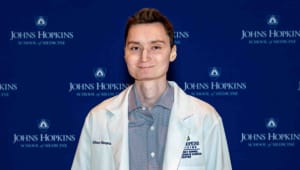
We invite you to support this important initiative! Help establish the Dr. Ethan Neumann Memorial Research Fellowship at Johns Hopkins to support young scientists advancing research on fibrolamellar hepatocellular carcinoma. Who was Ethan and what happened to him Dr. Ethan Neumann was a dedicated PhD student in the Graduate Training Program in Cellular and Molecular Medicine at Johns Hopkins University. He was a cherished member of the laboratories led by Drs. Mark Yarchoan and Chi Dang and his impact was greatly appreciated within the wider scientific community. He was a kind soul and a joy to work with. Ethan died at the age of 27 after living for five years with fibrolamellar hepatocellular carcinoma (FLC)—the cancer he devoted his research to understanding. How did Ethan approach being a patient-scientist He approached both his diagnosis and his research with extraordinary courage and purpose, dedicating his work to understanding and fighting his disease. Co-mentored by Drs. Chi Dang and Mark Yarchoan, Ethan embraced his unique role as a patient-scientist with sincerity, humility, and quiet determination. He participated in clinical trials for FLC, always aware that his efforts could help others who would face the same difficult journey. Those who worked with Ethan witnessed firsthand how he transformed personal hardship into a commitment to improve the lives of future patients. What did Ethan accomplish in his short time During his time at Hopkins, Ethan made important scientific contributions that will continue to influence the field. In the month before he passed, he co-authored two manuscripts, including work that advanced our understanding of fibrolamellar carcinoma metabolism and contributed to the discovery of a promising new biomarker for FLC How will the fellowship help new researchers To honor Ethan’s legacy and continue his impact, we are establishing an endowed research fellowship in his name at Johns Hopkins. This fellowship will support other talented scientists, allowing them to continue the research Ethan began and further the understanding and treatment of FLC. How can you help We invite you to help carry on Ethan’s legacy by supporting this fellowship. Your generosity will empower future researchers and honor Ethan’s extraordinary commitment to science and to helping others. Thank you for any support you can give.
35%
Funded
231
Donors
64
days
left


Taghva Family Experiential Learning Fund
By Johns Hopkins Medicine
We invite you to support this important initiative!
We invite you to support this important initiative! Created by a Johns Hopkins School of Medicine alumnus, the Taghva Family Experiential Learning Fund reflects a belief that the best physicians are not only technically exceptional—but also deeply human, intellectually curious, and grounded by a sense of purpose beyond the clinic.As a medical student at Hopkins, Dr. Alex Taghva received summer support that allowed him to explore both science and art: conducting early research in functional neurosurgery and deep brain stimulation, while also studying music at the Peabody Conservatory. This dual experience—bridging rigorous research with creative expression—shaped his path as a neurosurgeon and as a person. Dr. Taghva has generously committed $20,000 toward the $100,000 goal, but we still need your help. Each summer, the Taghva Fund supports one medical student in pursuing a meaningful experiential learning opportunity—whether through research, music, creative inquiry, or interdisciplinary exploration. These experiences help students develop empathy, resilience, and a broader vision of what it means to heal.Your support ensures that future physicians have the freedom to grow not only as clinicians, but as well-rounded, thoughtful leaders—ready to meet the evolving challenges of modern medicine with imagination, integrity, and heart.
20%
Funded
1
Donors
429
days
left


Mark McDaniels Rare Malignant Hematology Hope Grant
By Johns Hopkins Oncology
For some cancer patients, the fight isn’t just against cancer– a rare blood type can delay or prevent treatment. Your gift helps make treatment possible.
For some cancer patients, the fight isn’t just against cancer– a rare blood type can delay or prevent treatment. Your gift helps make treatment possible. For some cancer patients, the fight isn’t just against cancer– a rare blood type can cause treatment to be dangerously delayed or even impossible. Your gift helps open the door to treatment. Johns Hopkins Oncology Mark Alan McDaniels February 25, 1967 - December 12, 2024 Mark’s diagnosis of stage 4 non-Hodgkin’s lymphoma was sudden and devastating, yet he faced it with remarkable courage and unwavering optimism. Throughout his treatment, Mark’s determination never faltered, even as his body struggled against the disease. For Mark, like many cancer patients, blood transfusions are not just a treatment– they are a lifeline. When low blood levels made him symptomatic, an emergency transfusion was needed, but after a week with no match, we learned the true complexity of his situation. The cancer in his spleen created a rare blood antigen (anti-ANWJ), found in fewer than 15 cases since 1972, which exists on 99.99% of all human red blood cells. This rare condition made Mark both alloimmune and autoimmune, meaning his body was attacking both donor blood and his own red blood cells. This created a life-threatening challenge: finding compatible blood for transfusions became nearly impossible. Despite an exhaustive national and international search, only four units of matched blood were found for Mark. He spent half of his 74 days since diagnosis hospitalized, relying on these limited, rare transfusions to maintain the blood counts necessary to tolerate chemotherapy and fight his cancer. Throughout Mark’s treatment, his attitude and spark remained bright, even as his body struggled with limited resources. Eventually, Mark’s body, with chemotherapy treatments, couldn’t maintain the blood levels needed to survive. After an intense 10-week fight with tremendous medical efforts, Mark lost his battle with cancer and passed away on December 12, 2024. Mark’s story reveals the insurmountable challenges faced by patients with rare hematological cancers. The Mark McDaniels Rare Malignant Hematology Hope Grant was created to honor his legacy and spirit in supporting patients facing these complex conditions. Donations to this fund support Dr. Cole Sterling and the Johns Hopkins Oncology team in providing specialized care specifically for patients with rare hematological malignancies.
77%
Funded
42
Donors
1217
days
left

Training Tomorrow's Leaders: 50 Years of MSTP at Johns Hopkins
By Johns Hopkins Medicine
We invite you to support this important effort!
We invite you to support this important effort! For five decades, the Johns Hopkins Medical Scientist Training Program (MSTP)/MD-PhD Program has been a launching pad for the world’s leading physician-scientists. As we celebrate this milestone, your gift—of any size—helps propel the next generation of innovators who will shape the future of medicine through research, discovery, and clinical impact.Join us in advancing the next 50 years of excellence.
42%
Funded
9
Donors
64
days
left
The Gift of Every Day
By Johns Hopkins Medicine
Help us support Dr. Ken Pienta as he and his team transform groundbreaking discoveries into meaningful advances in cancer diagnosis, treatment, and prevention.
Help us support Dr. Ken Pienta as he and his team transform groundbreaking discoveries into meaningful advances in cancer diagnosis, treatment, and prevention. You have been there for me since my early stages of treatment for the Stage IV Prostate Cancer I was diagnosed with over nine years ago. I am doing very well, having finished a clinical drug trial, surgery, and radiation treatments. A long road it has been, made easier by the support of all of you! Thank you. Credit for “quarterbacking” my case goes to my oncologist at Johns Hopkins University Hospital, Dr. Ken Pienta. He and his staff, especially my research nurse Carolyn and physician's assistant Diane, have been amazing. Solid advice, the best treatments and technologies, and a humanity that has made all the difference. By treating my cancer, Dr. Pienta has literally given me the gift of every day. Every day with my family, every day with my friends, every day with colleagues, every day of quiet reflection, and every day of love, I owe to him and his determination to treat and ultimately cure cancer. Dr. Pienta is head of the prostate research program at Johns Hopkins and has personally pioneered many of the cutting-edge treatments available in the battle to end prostate cancer. Now he is taking it one MAJOR step forward with a very important discovery … we believe that Dr. Pienta and his dynamic team have discovered the reason for therapeutic resistance for metastatic cancer. Our Audacious Goal — Cancer Ecology Center This effort could quite literally change the landscape of how clinicians treat and cure not just prostate cancer, but ALL cancers. And now…Dr. Pienta needs OUR help. I encourage you to take a few minutes to watch the astounding video below, which highlights Dr. Pienta’s truly groundbreaking work. https://vimeo.com/bonnemaison/review/341835068/effe884bf0 I am thankful for my everyday and determined to help. I am mindful of the fact that, at this time of year, many worthy organizations are asking for help. Nonetheless, I am asking you to please donate to the research efforts of Dr. Pienta so that he can continue to give the gift of every day. Again, thank you for your thoughts, prayers, and support for us and our beloved kids and grandkids– Jackie, John, Nikki, Molly, Perry, Kelli, Jameson, Lyra, Meg, Nick, and Cara. Mike and Lisa
85%
Funded
42
Donors
64
days
left

Charash Foundation Dementia Research Fund
By Johns Hopkins Medicine
We invite you to support the Charash Foundation Dementia Research Fund! Join us in finding a cure for Dementia and Neurodegenerative diseases.
We invite you to support the Charash Foundation Dementia Research Fund! Join us in finding a cure for Dementia and Neurodegenerative diseases. Charash Foundation Dementia Research Fund "Help Science Remember, So We Never Forget." Dementia is one of the most devastating neurological conditions, stealing memories, independence, and the ability to connect with loved ones. While progress has been made, we still have much to learn about how dementia develops, how to slow its progression, and how it may be connected to other neurodegenerative diseases like Parkinson’s disease. To help drive this mission forward, the Charash Foundation, led by Neil and Heather Harris and their family, is establishing an endowed fund at Johns Hopkins Medicine to support research into dementia, Parkinson’s, and other neurodegenerative diseases. This fund will serve as a permanent source of funding for pioneering studies, innovative treatments, and cutting-edge discoveries led by world-class researchers in the Department of Neurology at Johns Hopkins. Exploring the Link Between Dementia & Parkinson’s Emerging research suggests that dementia and Parkinson’s disease may share underlying mechanisms, with some forms of dementia—such as Lewy body dementia—being closely tied to Parkinson’s. By studying these conditions together, researchers can uncover new insights that could transform the way we diagnose, treat, and potentially prevent these diseases. The Charash Foundation Dementia Research Fund will fuel critical research into dementia, while also advancing our understanding of how it may overlap with Parkinson’s disease and related neurodegenerative disorders. By supporting this research, donors play a direct role in accelerating discoveries that could lead to earlier detection, better treatments, and ultimately, hope for millions of families impacted by dementia and Parkinson’s disease. Help Us Build a Legacy of Hope Our goal is to raise $100,000 over the next five years to establish the Charash Foundation Dementia Research Fund. Once fully endowed, this fund will exist in perpetuity, continuously providing resources to advance dementia research. Every contribution—big or small—brings us closer to breakthroughs that could transform dementia and Parkinson’s care, offering new hope to millions of families. Double Your Impact Many companies match charitable contributions made by employees, doubling or even tripling the impact of your gift. Check if your employer participates here: Matching Gifts Join Us in the Fight Against Dementia & Neurodegenerative Diseases Your generosity has the power to drive real change. Donate today and be part of a movement dedicated to finding answers, offering hope, and improving lives. "Advancing research is only possible with dedicated partners like you. Thank you for supporting this important cause and making a difference." *To establish the Charash Foundation Dementia Research Fund, we must raise $100,000 over the next five years. If we do not reach the full endowment goal by June 30, 2029, all funds raised will still be directed toward critical dementia research at Johns Hopkins. The Department of Neurology at Johns Hopkins operates under the tax-exempt 501(c)(3) status of the Johns Hopkins School of Medicine. EIN: 52-0595110.
57%
Funded
35
Donors
976
days
left


Carol Moeller ALS Research Endowment
By The Moeller Family
We are establishing a permanent ALS research endowment in Mom's name at the Robert Packard Center for ALS Research at Johns Hopkins.
We are establishing a permanent ALS research endowment in Mom's name at the Robert Packard Center for ALS Research at Johns Hopkins. The Moeller Family Our goal is to establish an endowment* that will live on forever at The Robert Packard Center at Johns Hopkins to help fund ALS research in honor of Carol Moeller. Carol Moeller was a proud wife, mother and grandmother who was an avid runner, dental hygienist and active member of her temple and her community. Carol ran every morning for over 30 years and completed one marathon, multiple half-marathons and numerous 10k races. Although she maintained an extremely healthy lifestyle, in January of 2016, Carol noticed numbness in her face. In March of 2016 she was diagnosed with Bulbar Palsy, an aggressive form of ALS. In April of 2016, Carol lost the ability to speak and eat. She postponed a feeding tube surgery so that in May of 2016, Carol could run her last 10k race with her family by her side. In October of 2016, eight months after being diagnosed, she passed away, with her family by her side. Our family, with the support of the Charash Foundation led by Neil and Heather Harris and their family, has a goal of honoring Carol Moeller by funding ALS research for many years to come. We are determined to prevent others from experiencing what Carol did. We count on your contributions to make this dream become a reality. We are thankful for your consideration in helping us achieve this goal. It means the world to us! *To establish this endowment in Carol Moeller's name, we must raise $100,000 in five years. If we do not reach the endowment goal, the funds raised will be used for ALS research. The Robert Packard Center for ALS Research at Johns Hopkins operates under the tax-exempt 501(c)(3) status of the Johns Hopkins School of Medicine. The EIN number of the School of Medicine is 52-0595110. Does your company match gifts? You can check here: https://giving.jhu.edu/ways-to-give/annual-giving/matching-gifts/
111%
Funded
108
Donors
1161
days
left


Olivia Runs 50 States for Pediatric Cancer Research
By Johns Hopkins Medicine
We invite you to support this important effort!
We invite you to support this important effort! Running, literally, runs in my family. My dad, mom, and both grandpas have run numerous marathons and half marathons. Several of them have even run on all seven continents! So, I wanted to get in on the action! My goal? To run a 10K in all 50 states to raise $10K for pediatric cancer research at the Johns Hopkins Kimmel Cancer Center’s Division of Pediatric Oncology. Less than 5% of the National Cancer Institute’s budget goes to pediatric cancer research. And, less than 5 cents for every dollar raised by the American Cancer Society is directed to cancers affecting children and adolescents. With your support, I hope to help improve these numbers and positively impact pediatric cancer patients’ lives. P.S. Please “Like” my Facebook page to follow my progress. :)
66%
Funded
37
Donors
66
days
left